Packaging suppliers respond to QSR diners hungry for a better experience

By Shefali Kapadia

Packaging used to be an afterthought for quick-service restaurants.

“They’d throw in your little package of salt, pepper, a terrible napkin, a spork,” said Jim Owen, senior analyst of packaging and logistics at RaboResearch food and agribusiness.

But dining trends are changing. Convenience has become a top priority for consumers. More than 60% of Gen Z and Millennial consumers say takeout is an essential part of their lifestyles, and 47% of overall consumers order takeout at least once per week, according to National Restaurant Association data released this year.

QSRs can’t ignore their packaging. The customer experience in these restaurants is no longer bound to the tables and chairs or the art on the walls. QSRs now cater to a more mobile consumer: those eating in a car, munching on the go or even dining at home in sweatpants, according to Owen.  

“Packaging becomes the dining experience,” Owen said. 

Continue reading on Packaging Dive.

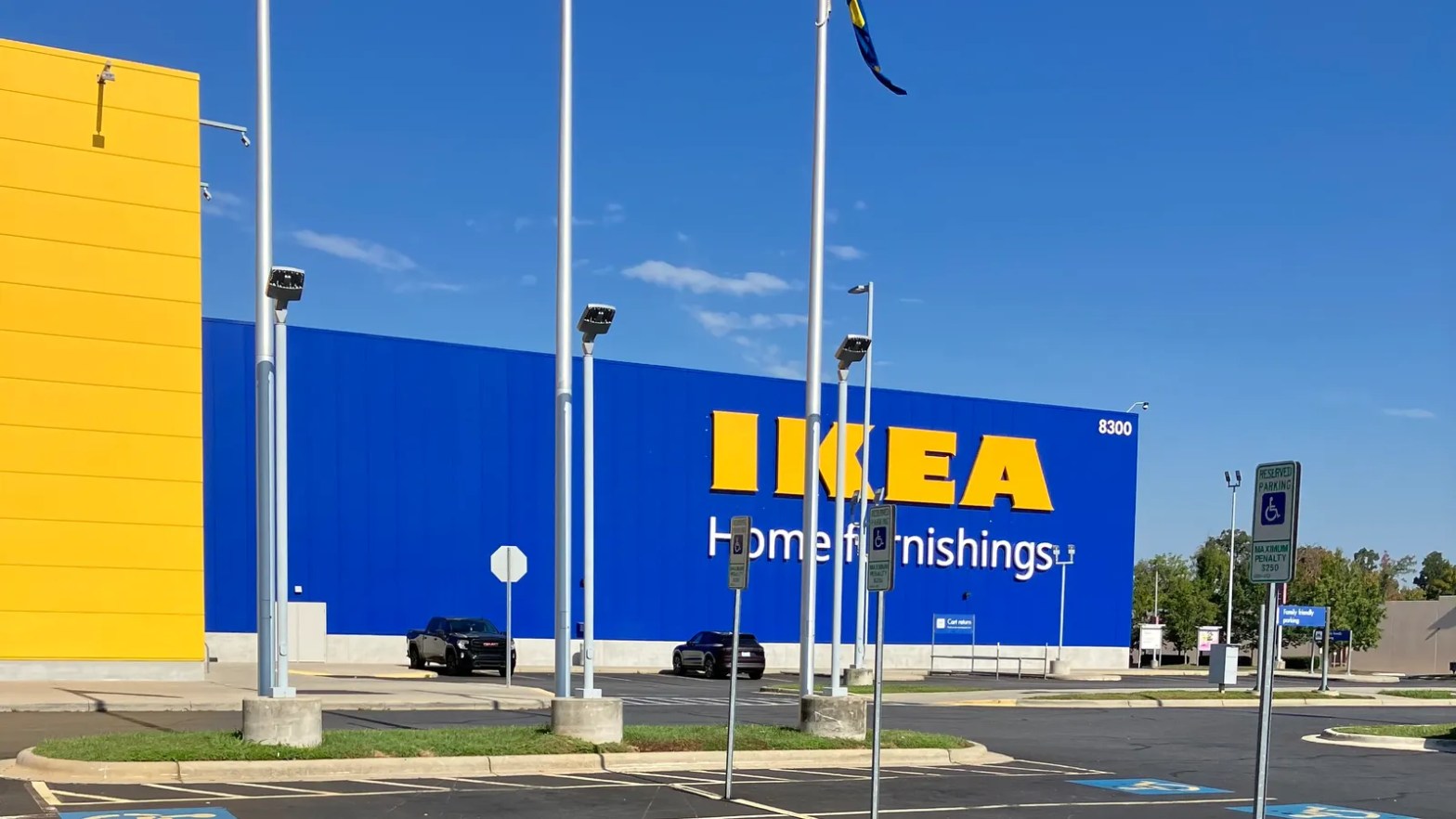
How Bob’s, Ikea are bucking the trend of furniture retail stagnation

By Shefali Kapadia

Around the Bob’s Discount Furniture office, corporate has a saying: “Value is always in vogue,” according to Ramesh Murthy, the retailer’s COO.

That philosophy has enabled Bob’s to expand at a time when the overall home retail category is stagnating. Furniture and home furnishings store sales have fallen since their peak of $12.7 billion in January 2023 to $11.8 billion this May.

Meanwhile, Bob’s announced plans to open 20 new stores this year. Fellow furniture retailer Ikea is opening eight new locations across the U.S. this spring and summer.

While these two retailers differ greatly, they share commonalities that cater to today’s consumer and have been instrumental in their expansion despite category softness: a focus on low prices and a penchant for convenience that seamlessly blends online and in-store shopping into a true omnichannel experience.

Continue reading on Retail Dive.

Universities are tailoring supply chain courses to prepare students for the industry’s AI revolution

By Shefali Kapadia

At The Ohio State University, students attend lectures on generative AI and predictive analytics for supply chain management. At Georgia Tech, supply chain leaders can take a “Generative AI Application for Supply Chain Professionals” course. The Massachusetts Institute of Technology offers a summer immersive called AI in Supply Chain and Logistics Management.

With AI becoming an integral part of supply chain operations — in areas like inventory managementwarehouse technology, and delivery routes — US universities and certification programs are incorporating tech-focused coursework into existing supply chain management lessons so that students can prepare to work in the sector’s up-and-coming careers.

In some cases, companies are partnering directly with universities to ensure students have the skills they need to join the workforce. Blue Yonder, a supply chain software provider, inked a two-year partnership in February with the University of Arkansas, making Blue Yonder the first-ever title sponsor for the Master of Science in Supply Chain Management Program.

Continue reading on Business Insider.

Companies’ biggest barrier to AI isn’t tech — it’s employee pushback. Here’s how to overcome it.

By Shefali Kapadia

When leaders at Colgate-Palmolive were ready to roll out an AI Hub for employees this past summer, they knew exactly what they wanted to avoid: a small group of people implementing an AI strategy assuming they knew the best use cases for each department and pushing an AI system onto the rest of the organization.

That kind of approach “puts a bad taste in people’s mouths” and can create “a huge amount of friction,” said Kli Pappas, the senior director of global predictive analytics and head of AI at Colgate-Palmolive.

Instead of a top-down method, the company created an internal hub through which anyone in the organization could input their natural language with instructions to build a personalized AI assistant and solve inefficient processes in their day-to-day work.

Colgate’s strategy avoided one of the biggest barriers companies face when adopting AI: employee pushback, hesitation, or resistance.

Continue reading on Business Insider.

Companies large and small are using AI for employee onboarding. It can save HR days of time.

By Shefali Kapadia

When your organization has nearly 300,000 global employees across the US, Japan, and Europe, many of whom work remotely, how do you manage onboarding new hires?

That scenario presented Hitachi with challenges to keep new employees engaged, but also an opportunity to overhaul its onboarding with an AI digital assistant this past fall.

Hitachi — along with smaller companies like Texans Credit Union — is incorporating AI into onboarding to save time and reduce delays. AI-assisted onboarding is common in tech companies, but it’s also important in high-growth firms that are rapidly adding many employees, said Edie Goldberg, the president and founder of the human resources consulting firm E. L. Goldberg & Associates.

Continue reading on Business Insider.

Testing 1, 2, 3: How CPGs get more sustainable packaging to store shelves

By Shefali Kapadia

Anyone who ordered an old fashioned or whiskey sour at the Johnnie Walker Princes Street’s 1820 bar in Edinburgh last fall may have noticed something unusual. The whiskey in the drink tasted the same, but it was poured from a different kind of bottle – a 90% paper-based bottle the brand was trialing, instead of the classic Johnnie Walker Black Label bottle made of glass. 

Over the years, pilots, trials and limited launches have been an important way for brands and their packaging partners to collaborate, experiment and advance sustainable packaging efforts.

Johnnie Walker’s parent company, Diageo, developed the new packaging as part of the Bottle Collective with PA Consulting and PulPac. Dave Lütkenhaus, global sustainability and innovation director at Diageo, said the paper bottle is 60% lighter than the glass bottle. This makes it easier for bartenders to carry and use, while still retaining the brand’s signature elements, including an embossed striding man.

“We’ve been able to combine sustainability benefits with a luxury look and feel to the bottle,” Lütkenhaus said. 

CPG brands and their packaging partners are increasingly working in tandem to set goals and success metrics as they develop, test and roll out innovative packaging solutions. Both parties recognize that designing packaging to be more sustainable frequently involves tradeoffs.

Continue reading on Packaging Dive.

Merchants maneuver as Visa enforces surcharge program

By Shefali Kapadia

Nearly two years after Visa began cracking down on surcharges, payments processors and independent sales organizations say they have a better understanding and sense of clarity on the network’s rules. 

At that time, Visa imposed a credit card surcharge cap of 3%, down from the previous cap of 4%. Many in the industry found communication and details to be lacking, and Visa’s cryptic business notices left payments professionals searching for answers.

Merchants are innovating in the market to cover rising interchange fees Visa charges them whenever consumers swipe to pay with that network’s cards. Regardless of retailers’ and restaurants’ approaches, they must follow the network’s rules to accept such payments.

Lately, James Shepherd, founder and CEO of CCSalesPro, said he’s heard far fewer “rumblings” about the card giant’s surcharge changes, including from his independent sales organization clients.

Continue reading on Payments Dive.

Truck driving: A diverse, but not inclusive, industry

By Shefali Kapadia

Women make up only about 10% of truck drivers, by some estimates. Several organizations have sprung up, focused on addressing female drivers’ unique needs and concerns on the road. 

One of those organizations is REAL Women in Trucking (RWIT)founded by truck driver Desiree Wood after she saw firsthand the many dangers on the road. We caught up with Wood, president of RWIT, to learn her story, her top tips and what the public gets wrong about female drivers. 

Continue reading on The Inside Lane.

From lotions to linens: How hotel marketplaces can boost guest loyalty

By Shefali Kapadia

Four Seasons’ bed linens and JW Marriott’s shampoo aren’t just for guests staying in the hotels anymore. The items are available for sale on dedicated websites, so customers can cozy up in Four Seasons sheets at home, or wash their hair with JW Marriott Ylang Ylang Shampoo in their own shower. 

For decades, selling in-room items has been a powerful way for hoteliers to earn revenue and enhance the guest experience. With the advent of e-commerce, luxury hotel chains could more seamlessly sell and ship products, forging deeper connections with their guests and reminding customers of the brand in everyday life. 

“When our guests use a candle with a signature scent from one of our hotels or sleep on their own hotel mattress at home, they are transported back to their hotel stay,” said Dana Hopp Peritz, vice president of retail and experiences at Marriott International. 

Continue reading on Hotel Dive.

6 months after Baltimore’s bridge collapse, lessons are emerging for a rebuild

By Shefali Kapadia

A key feature is missing over the Patapsco River in Baltimore. The water still glistens, and cargo ships still pass by on their way in and out of the port. But the Francis Scott Key Bridge, which had spanned the river since 1977, is no longer there.

In March, a container ship crashed into one of the bridge’s piers. The bridge collapsed, killing six people. Rescue efforts began immediately, and local authorities sprang into action to keep commerce and traffic flowing.

Now, six months out, the conversation has shifted from recovery to rebuilding. The Maryland Transportation Authority board approved a $73 million phase-one contract with Kiewit Infrastructure West Co., a firm with a long history of bridge projects. The rebuild is expected to begin next year, with the replacement bridge scheduled to open in fall 2028.

James Harkness, the chief engineer for the Maryland Transportation Authority, told Business Insider the phase-one contract was one of the biggest milestones to date on the bridge-rebuilding project.

“We are beginning to meet the new team, get acquainted, and start design concepts in earnest,” Harkness said.

Continue reading on Business Insider.

Design a site like this with WordPress.com
Get started