From Coke to Hershey, CPGs search for their sweet spot in pack size

By Shefali Kapadia

One pack, two pack, big pack, small pack.

While CPG companies’ packaging strategies are far more complex than a Dr. Seuss book, the general principles hold true. As companies adjust or add pack sizes to meet changing consumer preferences, there are new implications from production to recycling.

“They’re going to have to make line changes and equipment changes,” said Jonathan Quinn, vice president of marketing and sustainability at Accredo Packaging. “There’s a waterfall effect, no matter which direction you go.”

But CPGs aren’t shying away from shifting pack design and size, a practice known as price pack architecture. This year, Coca-Cola rolled out its newest packaging innovation in the U.S.: “Sliim” cans, which contain the same 12 ounces as standard cans but in a taller, more slender shape. Beverages such as Coca-Cola Classic, Diet Coke, Fanta and others are in these cans nationwide. 

It’s part of the soft drink giant’s strategy to meet “consumers’ fast-changing preferences,” a Coca-Cola spokesperson said in an email.

“Many consumers are interested in smaller portion sizes, while others are trying to stock-up with larger multi-packs,” the spokesperson said. “We will continue to evolve to meet people’s preferences.”

Continue reading on Packaging Dive.

What’s old is new: Food and beverage brands put a modern spin on retro packaging

By Shefali Kapadia

Tony the Tiger has adorned boxes of Kellogg’s Frosted Flakes for decades, and many consumers distinctly remember TV commercials where Tony would proclaim, “They’re gr-r-reat!” For a limited time last spring, Kellogg Canada ran a campaign that tapped into those memories. 

The food giant released nostalgic versions of cereal brands and their mascots, from Froot Loops’ Toucan Sam to Rice Krispies’ Snap, Crackle and Pop. The retro Frosted Flakes featured a two-dimensional Tony, spoon in hand and tongue out, ready to dive into his breakfast.

Many storied food and beverage brands, from household confectioners to big soda names like Pepsi, are leaning on their decades of history to redesign packaging with elements of their past.

In 2022, Bazooka Bubble Gum turned 75 and commemorated the milestone with 1980s graphics on its packaging. And in January this year, Cadbury released retro packaging to celebrate 200 years. 

Whether brands do limited-time launches or complete overhauls, the goal is to create eye-catching packaging that connects with consumers. Retro designs that bring up feelings of nostalgia are one key way to do that.

“It’s always a trend that evokes emotion,” said Jason Vaught, director of content and marketing at CPG creative agency SmashBrand. 

Continue reading on Packaging Dive.

Why carriers, shippers use drop and hook in good times and bad

By Shefali Kapadia

Shipper and carrier needs ebb and flow with the cycles of the market, but one particular service remains in high demand: drop and hook.

The practice involves a carrier dropping off one trailer at a dock and attaching another pre-loaded one, rather than live loading. The programs are popular among carriers, drivers, brokers and shippers due to efficiency and reduced dwell time.

“It’s a service that shippers need and carriers want,” said Adam McDonough, VP of truckload, North American Surface Transportation at C.H. Robinson Worldwide.

In today’s soft freight environment, fleets and freight brokers can use drop-and-hook programs to combat low volume and secure long-term agreements with shippers. J.B. Hunt Transport Services saw that bear out in Q4. Volume fell 7% year-over-year in its truckload segment. But volume rose within its 360box drop-and-hook program.

“Having a trailer pool makes it stickier,” said Chris Caplice, chief scientist at DAT Freight & Analytics. Instead of volume changing with each bid, shippers and carriers doing drop and hook must commit to a certain amount of business with each other, he explained.

“That’s exactly the key thing that carriers want: consistency,” Caplice said.

Continue reading on Trucking Dive.

‘Nightmare’ at Anheuser-Busch: Delayed Pay Raises, Layoffs, Surveillance Frustrate Employees Amid Bud Light Fallout

By Lauren Elkies Schram

Anheuser-Busch InBev was ill-prepared when its partnership with an influencer who identifies as transgender, Dylan Mulvaney, stoked swift backlash.

On April 1, Mulvaney posted a video on Instagram promoting a Bud Light NCAA March Madness contest. The sponsored post included a custom can of beer with Mulvaney’s face on it, commemorating her first year of gender transitioning.

Some factions of conservative celebrities, politicians and consumers slammed Bud Light and called for a boycott of AB products. Bud Light’s sales plummeted and retailers were forced to decrease shelf space for the brand, causing Bud Light to fall off its perch as the leader in the U.S. beer market.

An operations manager who left the company of his own volition in the fall described the climate amid the Bud Light fallout as “a nightmare to say the least.”

Does Size Matter? A Look at CPGs’ Largest Warehouses

By Shefali Kapadia

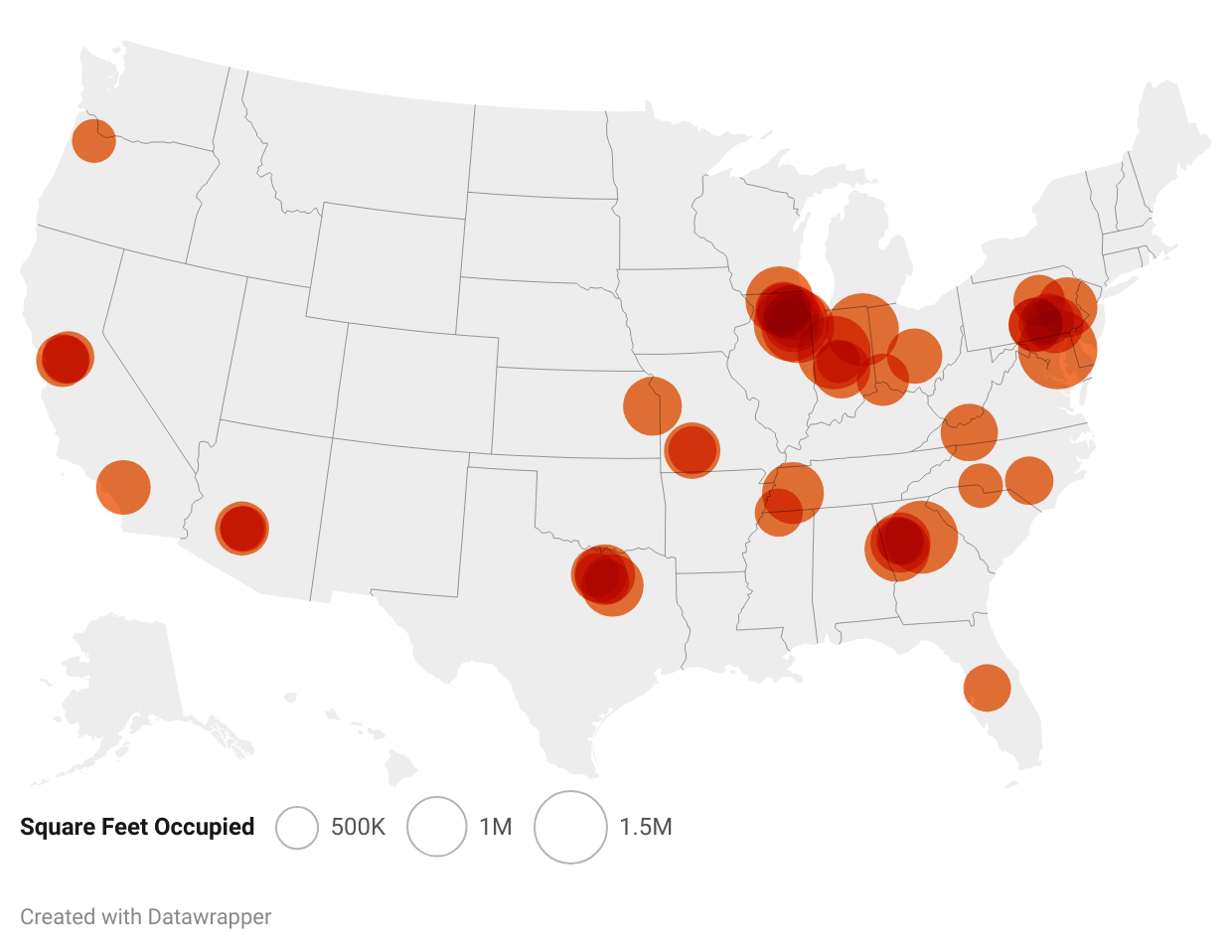
About 60 miles west of Chicago, bricks are being laid for a 775,000-square-foot building. That facility, in 2025, will be home to a Kraft Heinz distribution center.

The maker of Lunchables and Mac & Cheese deemed the facility “one of the largest automated CPG distribution centers in North America,” when it announced its $400 million investment to construct the warehouse. The center will “distribute its products to retail and foodservice customers faster than ever,” according to Kraft Heinz.

In a world where consumers and retail customers demand speedy delivery of a variety of products, food manufacturers have responded by occupying large distribution centers in major markets, allowing space to stock a wide range of SKUs that can quickly be transported to stores.

3 CPGs That Bucked Widespread Volume Declines

By Shefali Kapadia

Grocery baskets are looking a little emptier these days.

The majority of large food and beverage CPGs reported volume declines as they shared their latest quarterly financial results. Volume sales were down 2% YOY in mid-July across food and beverage, and average basket units were down 4.3% YOY, according to a Circana report.

Large packaged food manufacturers, in particular, are feeling the effects of slumping volumes.

“We’ve heard so far from a bunch of food companies that have reported earnings of … generally greater sluggishness in category volumes as pricing has lapped,” Barclays analyst Andrew Lazar said during Mondelēz International’s July earnings call.

Hershey’s Work Model: Deep Work Mondays and Pizza Wednesdays

By Shefali Kapadia 

HERSHEY, Pa. — On a Thursday at Hershey’s headquarters these days, the building is neither empty nor full. A group filters into a small conference room for an in-person meeting and fills every chair. A bank of cubicles on the upper floor sits largely vacant, and the handful of employees sitting there speak to their colleagues on video.

In the post-pandemic era, Hershey has adopted a flexible model for office work.

“We call it ‘best of both,'” CHRO Chris Scalia told CPG Specialist in an interview at Hershey’s headquarters.

Breaking: Anheuser-Busch to Lay Off Workers in ‘Every Corporate Function’

By S.L. Fuller

Anheuser-Busch is eliminating jobs “across every corporate function,” a spokesperson said via email, which will result in layoffs “representing less than 2%” of its U.S. workforce. The CPG employs more than 19,000 people nationwide, which means 2% would be about 380 employees.

A report from The Wall Street Journal said an internal restructure eliminated corporate and marketing roles at several offices, including St. Louis, New York and Los Angeles.

The restructure “will simplify and reduce layers” within the CPG, the spokesperson said. Frontline workers — such as brewery and warehouse staff, drivers, and field sales — are not affected.

How 6 CPGs Use Internships to Fuel Talent Pipeline, Encourage Industry Careers

By Cheryl Winokur Munk

Summer internships are in full-swing at many CPGs where industry hopefuls are getting acclimated to the profession, performing tasks such as market analysis, benchmarking, product testing and marketing as they learn the ins and outs of what could be their future career.

Many companies, including Anheuser-Busch, Conagra Brands, Coca-Cola, General Mills, Hershey, J.M. Smucker, McCormick & Company, Mondelēz, Nestlé, PepsiCo and Post Consumer Brands, have well-established internship programs. These paid opportunities often take place over a 10-to-12-week span and vary in terms of the number of interns accepted, experiences offered, timing, eligibility criteria and full-time hiring potential.

The hallmarks of a good program include meaningful, hands-on projects, exposure to various parts of the organization, strong mentorship, management interaction and professional development, according to college career professionals who routinely place interns at CPGs.

A Look at PepsiCo’s Journey Inside Web3 and the Metaverse

By Shefali Kapadia

CHICAGO — One morning in 2007, Kelly Ripa and Regis Philbin were hosting their TV show on ABC, discussing the debut of the iPhone. Talking on the phone through an iPod? “Ridiculous,” was Philbin’s conclusion. That bit was comedic then, and it still is now, but for a different reason.

The TV show clip played during a session at the Retail Innovation Conference and Expo in Chicago last week and elicited a laugh from attendees, many of whom had iPhones in their laps.

But where smartphones were 15 years ago is a similar place to where Web3 is today. It’s an iteration of the internet based on decentralized technologies, such as blockchain, that aren’t owned by tech companies.