Inside the financial health of trucking’s largest players

By Shefali Kapadia

Part of 2020 and 2021 so far have proved to be blockbuster for trucking. Consumer demand kept shippers busy and pleading for space, while the supply of tractors, trailers and drivers remained tight.

But not all trucking firms benefit equally from the continuing freight boom. As in every industry, some transport firms are financially healthier than others, according to data from RapidRatings, which assesses the financial health and risk of publicly traded companies.

“In many ways, the trucking companies can craft their own destiny, given the … demand for goods movement,” said James Gellert, CEO of RapidRatings.

The tables below show the financial health for 20 of the largest publicly traded trucking firms in North America, using two metrics:

  • Financial health rating: FHR is a measure of short-term resiliency and risk of default; it is based on liquidity, earnings performance and other factors.
  • Core health score: CHS is a measure of medium-term risk and efficiency. Gellert described CHS as a company’s ability to weather an internal or external storm.

The average FHR across industries in the U.S. in 2020 was 54.6, Gellert said, and most trucking firms’ FHR scores are well above that average.

“It’s a decidedly strong group of companies,” Gellert said.

Continue reading on Trucking Dive.

How to navigate the 90-day tariff ‘cease-fire’

Higher tariffs, lower tariffs. More tariffs, fewer tariffs. Steel tariffs, auto tariffs. The ongoing saga of the U.S.-China trade war feels like Dr. Seuss book meets roller coaster.

Throughout 2018, only one thing has been consistent for business managers when it comes to trade policy and regulation — uncertainty.

“This is no way for retailers to be doing business,” Hun Quach, vice president for international trade at the Retail Industry Leaders Association (RILA), told Supply Chain Dive.

Tariffs on $250 billion worth of goods from China are already in place, and the 10% duties on $200 billion were set to rise to 25% on Jan. 1, 2019.

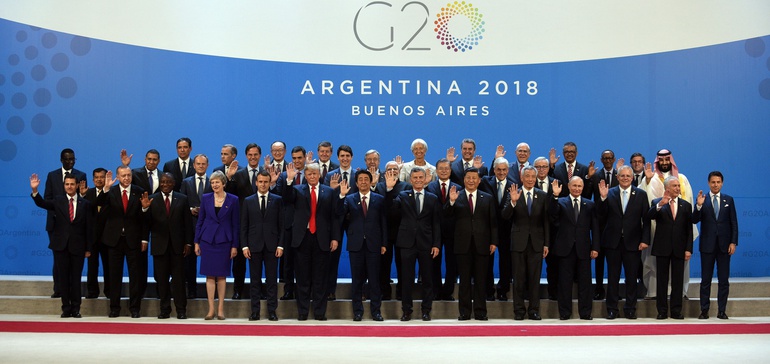
That all changed after a dinner between President Donald Trump and Chinese President Xi Jinping at the G-20 summit in Argentina on Dec. 1. The two leaders agreed to a 90-day tariff “cease-fire,” in which the countries would negotiate underlying trade issues and agree not to raise tariffs at the start of the year.

Business leaders welcomed the news, although it further added to the uncertainty surrounding planning for the new year.

Think of it as “trade war purgatory,” said Courtney Rickert McCaffrey, manager of thought leadership in A.T. Kearney’s Global Business Policy Council. “It’s not supposed to get worse for 90 days, but it’s also hard to see how it’s going to get any better,” she told Supply Chain Dive.

What happened since Dec. 1?

Trump appointed U.S. Trade Representative Robert Lighthizer to lead the negotiations, which reportedly came as a surprise to China’s leaders who had hoped for talks with Treasury Secretary Steve Mnuchin. Lighthizer is known for taking a hard line on trade and a tough stance on China.

Lighthizer clarified the U.S. and China face a hard deadline of March 1, 2019 to negotiate issues related to trade, after some conflicting messages came out of the two administrations shortly after the G-20 meeting. If a deal isn’t made by then, tariffs will rise to 25%.

On Monday, Dec. 10, Chinese Vice Premier Liu He spoke on the phone with Mnuchin and Lighthizer. A statement from the Chinese Ministry of Commerce, as cited by Reuters, said the leaders discussed a “timetable and roadmap for the next stage of economic and trade consultations work.” The Wall Street Journal reported Liu, who is leading the talks for China, will pay a visit to Washington after the new year.

China is reportedly considering lowering tariffs on U.S. automobiles from the current rate of 40% to 15%, according to Bloomberg citing sources familiar with the matter. The auto tariffs are separate from the duties on $200 billion worth of goods from China but have nonetheless been a source of contention in the U.S.-China trade war. Lighthizer said last month he would look into “equalizing” auto tariffs. Cars from China coming into the U.S. face a tariff of 27.5%.

What happens next?

Neither the U.S. nor the Chinese government has offered any specifics on the timetable or roadmap for the 90-day negotiation period.

“This 90-day timeline is incredibly ambitious,” McCaffrey said, and it’s unlikely enough time to resolve the trade concerns outlined in the White House’s statement following Xi and Trump’s meeting. The administration said negotiations would revolve around “structural changes with respect to forced technology transfer, intellectual property protection, non-tariff barriers, cyber intrusions and cyber theft, services and agriculture.”

Technology transfer and intellectual property are the basis of the U.S.’ imposition of tariffs on China under Section 301.

Made in China 2025, a state-led policy seeking to boost Chinese manufacturers, scale up technological advancements and decrease the country’s reliance on foreign suppliers and producers, also lies at the root of the trade tensions.

“Policymakers worry that China’s state-led model and its ambition to control entire supply chains … means that entire industries could come under control of a rival geopolitical power,” an analysis from the Council on Foreign Relations stated.

The U.S. government said China’s efforts to recruit foreign scientists to help boost its domestic business is an example of intellectual property theft.

Made in China 2025, released in 2015, is a relatively new policy, but tensions around technology issues have been in place for several years and administrations. A mere three months is highly unlikely to be sufficient to eradicate these trade practices.

“The issues here are very deep set,” Steve Bowen, Maine Pointe CEO and author of “Total Value Optimization: Transforming Your Global Supply Chain into a Competitive Weapon,” told Supply Chain Dive. “This is not about the immediate trade deficit.”

Given the complexity of the issues to be resolved, several analysts expressed to Supply Chain Dive they anticipate the 10% tariffs will rise to 25% on or shortly after March 1. Following that, “We think Beijing would retaliate, and tensions would just intensify from there,” McCaffrey said. In that situation, 10% tariffs on $60 billion of U.S. imports would rise to 25%.

A fourth tranche isn’t off the table either, which would involve tariffs on $267 billion of goods from China, likely followed by further retaliation. “The only way for a business to operate is to assume things could get worse before they get better,” Bowen said.

Plan for the worst-case scenario

Supply chain managers are always risk planning, and this 90-day “cease-fire” period offers no exception to the rule. “Companies certainly shouldn’t be standing still,” Geoff Pollak, managing director with Alvarez & Marsal, told Supply Chain Dive.

Pollak recommends supply chain leaders review their products with trade experts to ensure the goods are being classified correctly and their business is not paying duties unnecessarily on a product.

In the short term, tariff engineering may alleviate some duties for businesses. Consider a toolbox, for example, with items such as a hammer and screwdriver. The box is subject to tariffs, but if the products in the kit were segmented into parts that could be reassembled, tariffs would not apply. This same concept can be seen in the auto industry, as partly assembled cars face fewer and lower tariffs when exported compared to a fully assembled automobile.

In the medium to long term, however, Bowen said tariff engineering doesn’t go far enough. In planning for the future, supply chains need to conduct stress tests, he said, analyzing cost impacts of 10% tariffs, 25% tariffs or no tariffs, and making decisions strategically based on the scenarios.

Moving the supply chain isn’t always the solution

Many brands — Williams-SonomaHarley-Davidson and Honda to name a few — are moving production for U.S.-bound goods out of China to avoid tariffs.

The move may seem like a straightforward way to skirt extra taxes, but it doesn’t necessarily lead to lower costs in the long run.

A Maine Pointe client conducted stress tests for “what-if” tariff scenarios, and in the end, most situations resulted in China as the lowest cost option, even with a scenario of 25% duties. The cost difference was 5-6% less than moving sourcing elsewhere, Bowen said, due to factors such as labor costs and production capabilities. “China still wins the equation,” he said.

For some importers, shifting sourcing is not a viable option because of market dominance. Cotton sweaters are one example, said Quach. “From the yarn to the knitting to the sewing — all of those details are really being dominated in China.”

And even for supply chains that are able to shift, it doesn’t happen at the push of a button or wave of a magic wand. A RILA member that imports plastic stickers from China told Quach moving the supply chain to Taiwan will take about one year.

As of now, the trade war has mostly centered around the U.S. and China, but China is not the only country where the U.S. has a trade imbalance. “If you’re a buyer, and you’re moving to a country that also has an imbalance of trade, they may be next after China,” Pollak said. “Moving from one Asian source supplier to another may not be the right solution.”

The 90-day opportunity

There’s a silver lining to the three-month limbo period casting a shadow over businesses — the gift of time.

Companies that have determined shifting sourcing is an appropriate course of action now have additional time to move their supply chains. Businesses still working out plans have a few more weeks to conduct risk assessments.

The postponement of tariff increases also gives buyers an opportunity to negotiate with their suppliers to keep costs under control. “This is a good time to find a common ground between what the companies want and their suppliers to balance,” Pollak said. “Suppliers have to be willing to have an engaging relationship versus a transactional relationship.”

No one-size-fits-all strategy will apply to every company to mitigate tariffs. The critical lesson for all industries, however, is to plan for any and all possibilities.

“When it comes to international — and add the word politics into that — I don’t think any of us have a crystal ball to predict that,” Bowen said. “You have to prepare for all outcomes.”

From mushroom to handbag: Creating a closed loop textile supply chain

Spoiled milk becomes toilet paper. Pineapple leaves become faux leather. Spider silk becomes a Lexus seat.

These are just a few of the applications on the market as supply chains seek sustainable solutions to meet growing consumer demand.

In Supply Chain Dive’s series, Deborah Abrams Kaplan explores the innovative ways manufacturers are taking natural materials and waste products — and giving them new life in the form of textiles.

The supply chain behind turning unusual materials into textiles

Businesses are mining waste products for fiber production, giving rise to dozens of new alternative fibers on the market made from everything from mushroom roots to spoiled milk. Read More >>

Farm to label: Turning corn into textiles

About 400 million tons of corn goes to waste each year, making it a good candidate to transform into new materials. Read More >>

Case study: Circular Systems turns scraps into textiles

In the era of fast fashion, producers are looking at alternative materials to support growing consumer demand. Read More >>

Resilience Plan of the Year: Hasbro’s inventory management strategy

See the original article. 

Nine West, Sears, Mattress Firm — the list of retailers that filed for bankruptcy this year is by no means a short one.

Retail bankruptcies can wreak havoc on supply chain partners. In the case of Toys R Us, vendors took significant hits as a major customer filed for bankruptcy under Chapter 11 last year.

“I’m sure [vendors] were rooting for Toys R Us, because it was such a big demand channel for them,” Rod Daugherty, vice president of product strategy for Blue Ridge, told Supply Chain Dive.

But as we know, this story doesn’t have a happy ending. After a 2017 holiday season with abysmal sales, Toys R Us’ Chapter 11 hopes fizzled away.

Suppliers faced a test of resilience

As the liquidation drama unfolded, vendors suffered. Suppliers filed court motions, asking for their inventory to be returned and claiming losses of tens of millions of dollars.

The series of events was a major test of resilience for Toys R Us suppliers — and although all suppliers suffered losses, one vendor seemed to rise above the fray.

“Hasbro will continue to deliver strong earnings and cash flows and … sustain relatively stable credit metrics despite the short term challenges of a shifting retail environment,” Moody’s Investors Service wrote in an analysis in May.

It’s difficult to know exactly what was occurring behind the scenes at Hasbro that allowed it to remain stable in a shifting environment. The company did not respond to repeated requests for comment from Supply Chain Dive.

Analysts said the toy manufacturer made a concerted effort to look closely at its sales and operations planning and even saw Toys R Us’ bankruptcy filing and liquidation as an opportunity to gain market share.

Hasbro was “able to ascertain when it was time to cut the cord with Toys R Us,” Daugherty said.

For careful planning as the toy supplier faced significant risk, Hasbro’s inventory management strategy has received Supply Chain Dive’s award of Resilience Plan of the Year for 2018.

‘Specific strategic decisions’ around inventory

Through forecasting and S&OP tools, Hasbro had visibility into its product categories “probably clear down to individual SKU level,” Daugherty said. That detailed information allowed Hasbro to decide how, where and when to sell its goods.

“We’ve made some specific strategic decisions on how we’re deploying our inventory around our new initiatives for brands that are selling incredibly well,” Hasbro CEO and Chairman Brian Goldner told investors on a call in April.

“I’m sure [vendors] were rooting for Toys R Us, because it was such a big demand channel for them.”

Rod Daugherty

Vice President of Product Strategy, Blue Ridge

Hasbro withheld some of its most popular products from Toys R Us to prevent them being liquidated, which would reduce the value of the goods.

Once liquidation takes place, “all of the other major retailers won’t want to carry those products, and they won’t want to buy new products from Hasbro,” Rex Clothier, executive vice president of strategic procurement for Maine Pointe, told Supply Chain Dive.

In order for a retailer to sell inventory that had been liquidated in another store, it would need to sell the products at a lower cost, and therefore a lower margin, Clothier said. Otherwise, the retailer wouldn’t appear competitive and might struggle to get the product off its shelves.

For this reason, liquidated inventory is unappealing to retailers, and something Hasbro needed to avoid.

Making the call early

As any operations or supply chain manager knows, withholding inventory isn’t as simple as letting inventory sit in a warehouse, waiting for the right opportunity to ship it out.

“Once they have a bunch of inventory, they’ve got to sell it,” Daugherty said. In some cases, reducing inventory involves going back to manufacturing partners and reworking production schedules upstream.

The timing of adjusting production and the supply chain can be tricky, however. “One of the tough things for all these toy suppliers … there’s such a long lead time to some of those toys,” Daugherty said. While he didn’t have exact figures on Hasbro’s product lead times, he estimated them between 90 and 180 days.

To adjust manufacturing plans, suppliers “would have had to make that call six months ahead of the big liquidation news from Toys R Us,” Daugherty said. “So that’s difficult.”

Toys R Us filed for bankruptcy in September 2017 and announced plans to liquidate six months later, in March 2018. Rumors and speculation the retailer would file for bankruptcy, however, were circulating well in advance of its September 2017 filing.

Daugherty said Hasbro kept a close eye on Toys R Us’ financial stability, using that information to inform its inventory management decisions. “One thing Mattel could have done better is if they’d have been somewhat more vigilant or maybe less optimistic about Toys R Us’ chances for survival, they probably would have done a better job of throttling back their own production.”

Making lemonade from Toys R Us liquidation lemons

Hasbro was acutely aware of the need to sell its inventory through other channels. “The order of magnitude and the size of channels that Toys R Us represented made this more than just the typical risk profile,” Clothier said. “It actually enabled an opportunity at the same time.”

As Toys R Us ceased to be a viable channel, retailers were eager to grab a slice of the market share left behind by the toy retailer’s liquidation. Walmart moved forward with plans to expand its toy assortment by 30% in-store and 40% online. Target cleared 250,000 square feet of space in its stores for toy merchandise and related events.

It was in that hunger for market share that Hasbro saw an opportunity — a chance to approach the Toys R Us saga “not just from a risk mitigation standpoint, but a proactive market share accumulation standpoint,” Clothier said.

“Hasbro being proactive in bringing those solutions forward made them a very logical first in line choice for some of those major retailers.”

Rex Clothier

Executive Vice President of Strategic Procurement, Maine Pointe

As part of optimizing channels, Hasbro deployed inventory to retailers “that have the greatest levels of sell-through so that we can match inventory to demand, even better than we have in the past,” Hasbro CEO Goldner told investors in July.

Clothier said Hasbro worked actively with retailers to accelerate the new channels, collaborating on shelf space and marketing promotions. “Hasbro being proactive in bringing those solutions forward made them a very logical first in line choice for some of those major retailers,” Clothier said.

Moving forward into the next year, Hasbro plans to continue growing its relationship with retail customers, “to ensure we get to a new higher level of commitment and capability with those retail relationships … setting us up for a new higher level of retail support in 2019,” Goldner said on an earnings call in October.

Lessons learned

Hasbro’s journey through Toys R Us’ bankruptcy wasn’t smooth sailing. Revenues were down in the third quarter of 2018, which the company said was a reflection of lost Toys R Us revenues.

“While we believe that some of the lost sales will be made up through other retailers and channels, we still expect sales to be soft in 2018 compared with previous expectations for single digit growth,” Moody’s wrote.

In addition, USA Today reported in October the company was planning job cuts for up to 500 workers.

But strong, established planning and forecasting processes set Hasbro up to be resilient in the event of a major risk event.

Clothier said the brand looked at inventory and S&OP as a core part of its business. “That’s something we observe in more mature supply chains,” he said. “I’m going to suspect they had some pretty mature processes already in house to be able to react and move as smoothly as they did on an accelerated basis. That in itself is a competitive weapon.”

Managing traffic congestion around Atlanta’s ‘gateway to the world’

For 20 years and counting, Atlanta’s Hartsfield-Jackson International Airport (ATL) has worn the badge of honor of busiest airport in the world. About 275,000 passengers traverse the airport each day, and nearly 650,000 metric tons of cargo and mail passed through the facility in 2016.

“It is a major gateway to the world — one can reach pretty much any destination within one or two flights from Hartsfield-Jackson International,” Jon Slangerup, Chairman and CEO of American Global Logistics, told Supply Chain Dive.

With the airport’s sprawling network of flights and connections, it’s no surprise major companies such as Coca-Cola, Home Depot and UPS have set up shop nearby in the city of Atlanta, offering them close proximity to the airport to receive supplies and ship their goods.

With growth comes growing pains, and one of the biggest issues plaguing the city’s streets is traffic congestion — but the city has a plan.

“Technology can be a great enabler of easing congestion in high volume areas,” Slangerup said. Through satellites, sensors and automation, the greater Atlanta area is implementing technology solutions to ensure people and goods flow freely — both in the air and on the ground.

Technology to manage hundreds of flights per hour

Despite thousands of flights arriving and departing every day at Atlanta’s international airport, air traffic suffers from very little congestion. In fact, in addition to being the busiest airport in the world, ATL has also been ranked the most efficient airport in the world since the early 2000s.

“Air Traffic Control is a very well-planned, highly-structured system,” a spokesperson for the Federal Aviation Administration (FAA) told Supply Chain Dive.

Atlanta’s international airport has five parallel runways, allowing several flights to take off and land simultaneously. In good weather conditions, as many as 132 flights can land each hour, the FAA said, with that figure dropping to 98 flights per hour in low visibility conditions.

The efficiency has been the result of numerous sophisticated technologies used to manage air traffic.

“Time-Based Flow Management (TBFM) is an important tool that air traffic controllers use very effectively to manage traffic at ATL,” the FAA spokesperson said. The tool monitors planes’ locations in the air and determines the most efficient schedule to get the aircraft to its destination.

In addition, the FAA has deployed satellite and automation technology at ATL for greater accuracy and more efficient routing, through tools such as Performance Based Navigation (PBN) and En Route Automation Modernization (ERAM).

“In the past, pilots flew over one ground-based radio transmitter and then flew over the next one in a zigzag pattern,” the FAA said. “PBN enables aircraft to fly much more directly from departure to destination by using satellite signals.”

The ‘vicious cycle’ of traffic congestion

Shipments by air may arrive quickly and efficiently into Atlanta’s airport, but rarely is the airport the final destination for products, Slangerup said. “Currently, the predominant method of getting goods from seaports and airports to other cities within a given radius is trucking.”

The same efficiency found in Atlanta’s airport operations unfortunately has yet to be found on the city’s roadways. “Delayed goods are a real problem, regardless of the mode moving them,” he said.

While Los Angeles takes the cake for worst traffic congestion in the world, Atlanta is not far behind, ranking 8th in the world and 4th in the U.S. The average commuter in the region spends 70 hours per year in traffic — nearly three days.

The worst U.S. cities for traffic congestion
Rank City Hours/Year in Congestion
1 Los Angeles 102
2 New York City 91
3 San Francisco 79
4 Atlanta 70
5 Miami 64

INRIX Global Traffic Scorecard

Of the 100 worst bottlenecks in the U.S. ranked by the American Transportation Research Institute (ATRI), seven are located in and around Atlanta. The top bottleneck is Atlanta’s intersection of I-85 and I-285, commonly referred to as the Spaghetti Junction, where the average speed is just 37 mph — and less than 25 mph during peak times.

“Trucks carrying containers, whether they’re 20- or 40-feet, tend to slow the flow of traffic. They’re big, less than speedy and obtrusive, and their impact on automobiles cannot be overstated,” Slangerup said. “Of course, the more congestion in any given area, the slower the movement of the goods being transported. It becomes a bit of a vicious cycle.”

Roadway congestion, through a combination of both trucks and cars, puts significant stress on infrastructure. The most recent infrastructure report card for Georgia, published by the American Society of Civil Engineers in 2014, gave the state a grade of “C” for infrastructure, and “C-” for its roads.

Smart corridors: the congestion solution?

In highly trafficked areas, technology “can provide the kind of visibility that helps logistics and supply chain professionals be more proactive about sending more goods into an already saturated environment,” Slangerup said.

Earlier this year, the Georgia Department of Transportation announced plans to build a smart commercial vehicle-only corridor along I-75 in hopes of alleviating congestion. The $2 billion project is scheduled to begin construction in 2026 and could take 10 years to build.

While details aren’t finalized, the project could involve fiber optic cables and sensors to inform drivers on traffic conditions and congestion. Technology involved in the smart corridor would likely also support autonomous technology, such as truck platooning, which digitally tethers two trucks so that they travel very closely to each other, thus reducing drag and fuel usage.


“[Trucks are] big, less than speedy and obtrusive, and their impact on automobiles cannot be overstated.”

Jon Slangerup

Chairman and CEO, American Global Logistics

The corridor is some years away, but Atlanta is already testing a smart corridor on a roadway known as North Avenue — a collaboration between Georgia Tech and the city of Atlanta and launched last year. The avenue connects several important destinations in Atlanta, including headquarters of Coca-Cola and AT&T and the Georgia Department of Transportation.

Along the corridor are hundreds of internet of things (IoT) sensors and high definition cameras connected to an app with video analytics. “All of the traffic signals are like neighbors. Each neighbor is telling the other, ‘here’s what’s coming your way,'” Keary Lord, project director of National ITS and Traffic Engineering Services at Atkins said in a video. “They can constantly repeat algorithms to provide better mobility.”

Among the goals are reducing congestion on the road, moving vehicles more efficiently and improving safety. The project serves as a pilot, with more smart corridors possibly rolling out in the future.

The Atlanta Regional Commission expects 56% growth in freight volume by 2040, and smart city solutions will be critical to handle the more trucks on the road. Slangerup said a combination of technologies, such as artificial intelligence, GPS and predictive modeling will help to provide greater insight into congestion.

“I don’t know that we, as an industry, have yet developed the technology that can truly mitigate congestion,” he said.


Port, border groups call for infrastructure, NAFTA to preserve ‘tremendous flow of commerce’

WASHINGTON — Port association and border group leaders testified on Capitol Hill Wednesday, calling for investments in ports to facilitate the free flow of goods across borders and within the U.S.

“Delays at our ports result in an overall loss of commerce,” Sen. John Cornyn, R-Texas, chair of the Senate Subcommittee on International Trade, Customs and Global Competitiveness, said during the hearing. “We must fund the ports that make trade possible in the first place.”

Panelists outlined three major resources needed at ports across the nation: Personnel, technology and infrastructure. The need for those resources is universal, at land and seaports, on riverways, the U.S.-Mexico border and the coasts.

Infrastructure in particular has come into the spotlight, with Donald Trump promising trillions of dollars in infrastructure spending while on the campaign trail, although no plan has passed since he assumed office.

As e-commerce and shipments grow, ports are increasingly desperate for the funding needed to modernize and update their infrastructure. At the hearing, Kurt Nagle, president and CEO of the American Association of Port Authorities (AAPA), said the seaport industry will need $66 billion over the next 10 years.

A breakdown of projected infrastructure needs for the port industry.

In a report issued in June, AAPA projected a need for a $20 billioninvestment in multimodal and rail access projects in the next decade, due to growing populations and increased shipping volumes.

While the FAST Act, signed into law under by President Obama, authorizes billions for freight spending, it limits spending on multimodal projects, Nagle said at the hearing.

Port have made it clear that investment in multimodal projects are a top priority. The association advocated for raising the cap on multimodal funding under the FAST Act.

​”The waterways always end somewhere,” Mary Ann Bucci, executive director of the Port of Pittsburgh Commission, told the Senate subcommittee. Bucci said in Pittsburgh, each waterway and port offers connections to rail, truck or both, allowing goods to reach their final destination. “We’re just one of three pieces.”

For ports of entry on land borders with Mexico, infrastructure is severely outdated, with ports averaging 40 years old. As a result, the layout and construction of the ports aren’t suited for the enormous volumes of trucks passing through the border each day.

While infrastructure is critically important, it’s just one piece of the puzzle. Land border ports of entry require sound trade relations and customs processes to keep goods moving.

Relations between the U.S. and Mexico have soured recently as a result of numerous political moves, from talks of building a wall to tariffs imposed on steel and aluminum imports.

Negotiators hit pause on NAFTA negotiations as participating nations go through elections, but Mexico now hopes to ink a deal by the end of August.

Panelists called for swift modernization and approval of NAFTA. “Our three nations’ supply chains are deeply integrated, which has created a highly efficient, just-in-time manufacturing environment,” Sergio Contreras, vice chairman of the Border Trade Alliance, said in his testimony.

Without a free trade agreement, Contreras, along with Laredo, Texas, Mayor Pete Saenz, said shipments between the two nations could be at risk. In Laredo, Saenz said about 16,000 trucks cross the border each day.

“There’s a tremendous flow of commerce,” he said. “It begins in Mexico, and we need to coordinate the flow of goods into Mexico. This is why its important to maintain good relationships with the Mexican counterparts.”

It’s unknown how Mexico’s newly elected president, Andrés Manuel López Obrador, will handle NAFTA negotiations.

“Now [the Trump administration] knows who’s going to be in charge and hopefully provides better condition to consummate that quickly,” Cornyn said. “Legitimate trade is the lifeblood of that region — and of our country’s economy.”

Does Tesla’s ‘big ask’ for cash from suppliers risk disrupting the supply chain?

Dive Brief:

  • Tesla sent a memo to some of its suppliers, asking to return cash to the automaker, The Wall Street Journal reported. Tesla did not respond to Supply Chain Dive’s request to confirm the memo.
  • The automaker told the Journal it is looking for price reductions from some of its suppliers to improve competitive advantage.
  • Since the beginning of the year, “we’ve seen a huge run up” in the amount of money due to suppliers, Bill Danner, president of CreditRiskMonitor, a financial risk analysis and news service, told Supply Chain Dive. The figure, however, isn’t unexpected as Tesla ramps up production of the Model 3.

Dive Insight:

At the end of the first quarter of 2018, Elon Musk assured Tesla shareholders he’s feeling “quite confident” the auto company will have positive cash flow in the third and fourth quarters of the year. If Musk is able to deliver, the result will be a sharp turnaround from the past several quarters of millions in negative cash flow.

Credit: Shefali Kapadia / Supply Chain Dive, data from CreditRiskMonitor

On its path to turn the numbers around, Tesla has boosted production, restructured its workforce and now it is going to its suppliers to negotiate prices and payment terms. “If they can get better payment terms, that won’t make it more profitable, but it will at least cause them to have better cash flow, because they don’t have to pay the suppliers quite as quickly,” Danner said.

But Danner doesn’t think most suppliers have the financial capacity to move the needle far enough to bring Tesla’s cash flow into the black.

“The suppliers are probably feeling a little stressed out at the moment,” he said. As the automaker boosted production of its vehicles, it likely requested more parts produced quickly by its suppliers, along with engineering and design changes. “And now he wants money back? Those are big, big asks.”

As Tesla demands more of its suppliers, it needs to consider the long-term impact, Marcell Vollmer, chief digital officer at SAP Ariba, told Supply Chain Dive in an email. “It’s easy to ruin trust but takes ages to rebuild.”

While Tesla has reportedly asked for cash back, Volkswagen went to its supplier Prevent years ago with the same goal to boost profits. It asked Prevent to lower prices, but the move backfired. “Prevent was a single supplier and stopped delivering seat covers. Volkswagen had to stop production. The supply chain got disrupted and … Volkswagen had to delay delivering thousands of cars to consumers,” Vollmer said.

Delayed car deliveries would mean delays in funds coming in — and could translate to late supplier payments.

Since the beginning of the year, Danner said Tesla’s delinquency rate of supplier payments has stayed about the same. “They’re not paying everybody on time, but they’re paying a lot of their vendors on time,” he said.

If the delinquency rate increases, it could sound alarm bells for vendors. Tesla is “some distance from bankruptcy,” Danner said, but given its high debt and financial structure “if the economy stumbles, this company is pretty vulnerable to economic shock.”

Yoga enters the workforce

(Click here to view published article.)

Employers Embracing Health, Productivity Benefits

Yoga article

Of the Pentagon’s many secrets, one of the most surprising may be that yoga classes are offered at this military fortress on a regular basis. Jess Pierno, formerly a Department of Defense (DoD) employee, was one of the instructors during her time at the Pentagon, teaching a weekly lunchtime meditation and yoga class.

“These people who are dealing with huge stressful issues take an hour for themselves, hit the reset button on their brains, and then go back out and deal with everything. They loved it,” said Pierno, who last year left DoD and opened Yoga Heights in the Petworth area of D.C.

Many businesses in the D.C. area are taking advantage of yoga’s restorative powers, as they take a vested interest in how wellness classes can improve employee health, morale, productivity and relations.

Supporting Good Health

The physical benefits of yoga are numerous. Among them, the American Osteopathic Association says, are improvements to circulatory health, metabolism, sleep and endurance.

Yoga can also help to reverse some of the side effects of the modern workplace. “Staring at a computer all day, I think we naturally tend to hunch over, rounding [our] spine, instead of sitting up straight,” said Nanci Dodson, D.C./Maryland area manager of CorePower Yoga,  a company with yoga studios nationwide. She said yoga practitioners become more aware of their posture, making a conscious effort to sit up straight throughout the workday.

Seeing the potential benefits of yoga for office workers, many companies are hiring yoga studios to lead classes at the office, free of charge for employees. Angela Proudfoot, human resources director at the Municipal Securities Rulemaking Board in Alexandria, Va., established a corporate yoga program there.  The hour and 15 minute classes meet weekly at her office after working hours.

Proudfoot herself first tried yoga four years ago, after determining that physical therapy was not improving a serious foot injury sustained while skydiving. Her injury will never heal entirely, but she said practicing yoga has drastically improved her balance, flexibility and mobility. She is even able to skydive and run long distances again.

Aqeel Yaseen also found the benefits of yoga to be life-changing. When he first tried it, he was suffering from depression and weighed more than 300 pounds. Over the course of five years, yoga  “helped me change my habits, and I lost close to 200 pounds,” he said.

Bringing Yoga to Employees

Following this transformative experience, Yaseen got his yoga teacher certification and now teaches 18 classes each week. He teaches studio classes at Yoga District, and corporate classes at several area law firms and the U.S. Bureau of Labor Statistics.

“More and more companies are showing a dedication to their employees’ health and wellness, which is incredible,” said Catherine Zack, wellness director and senior manager at Flow Yoga Center in D.C.’s Logan Circle neighborhood.

Corporate yoga programs are also in place at the International Monetary Fund, the Kennedy Center, the Department of Justice and many more offices, Pierno said.

The Department of Youth Rehabilitation Services recently started a corporate yoga program through Yoga Heights. “The director came the first day and took class with everybody,” Pierno said. “He really led by example. He took off his shoes, rolled out his mat and participated with everybody.”

Building Bonds & Focus

The example of that director is reflective of how yoga can lower barriers between executives and staff. “Sometimes a manager and someone reporting to them are practicing right next to each other, and it changes the dynamic of their relationship,” Yaseen said.

Proudfoot agreed that the classes at her office feel like a “team-building exercise.” She added, “The people who come to that class on a regular basis really get to know each other on a completely different level.”

She also said that her colleagues reported better concentration and productivity at work. Studies conducted at the universities of Illinois, California and Pennsylvania all found cognitive functioning improved after just one yoga class, helping to boost focus and memory.

“A lot of times, we spend our time dwelling on something,” Zack said. “What yoga and meditation really helps us do is to stay focused inside the moment.”

Proudfoot can relate. “I would go into stressful situations, and I would just breathe and remember some of the mantras that my teachers would recite at the end of classes,” she said. “That for me was a complete 180.”

A meditative state doesn’t come easily to everyone, though. Yaseen said every corporate class he has taught contains its fair share of skeptics.  Yoga classes typically end with a 10-minute “savasana” (corpse pose) in which students lie on their backs with eyes closed in a state of deep relaxation.

“It’s very difficult for them to let go for 10 minutes,” Yaseen said, “because they think maybe they’re wasting their time.”

Getting Yoga on the Schedule

Time is of essence in the corporate world, and many executives complain they don’t have enough to spare for daily yoga practice. However, given the benefits, it could be worthwhile to fit yoga in, even if it’s in small increments.

Zack said lunchtime classes bring out the executives at Flow Yoga Center. She added that the studio is working actively to expand its corporate programs even further.

As an alternative to office classes, some companies offer corporate yoga memberships. These partnerships provide employees with discounted rates on classes at a yoga studio. At CorePower, a number of executives use their corporate memberships to attend classes before and after work, Dodson said.

When going to a studio class isn’t feasible, home practice is always an option. Yoga videos for every level of practice are easy to find online. “Just start by taking five minutes every morning,” Pierno advised. “You’ll notice the changes, and you’ll notice an increase in energy. And before you know it, you’ll want to practice longer.”

Design a site like this with WordPress.com
Get started