After years of ‘Made in China,’ supply chains consider alternatives

By Shefali Kapadia

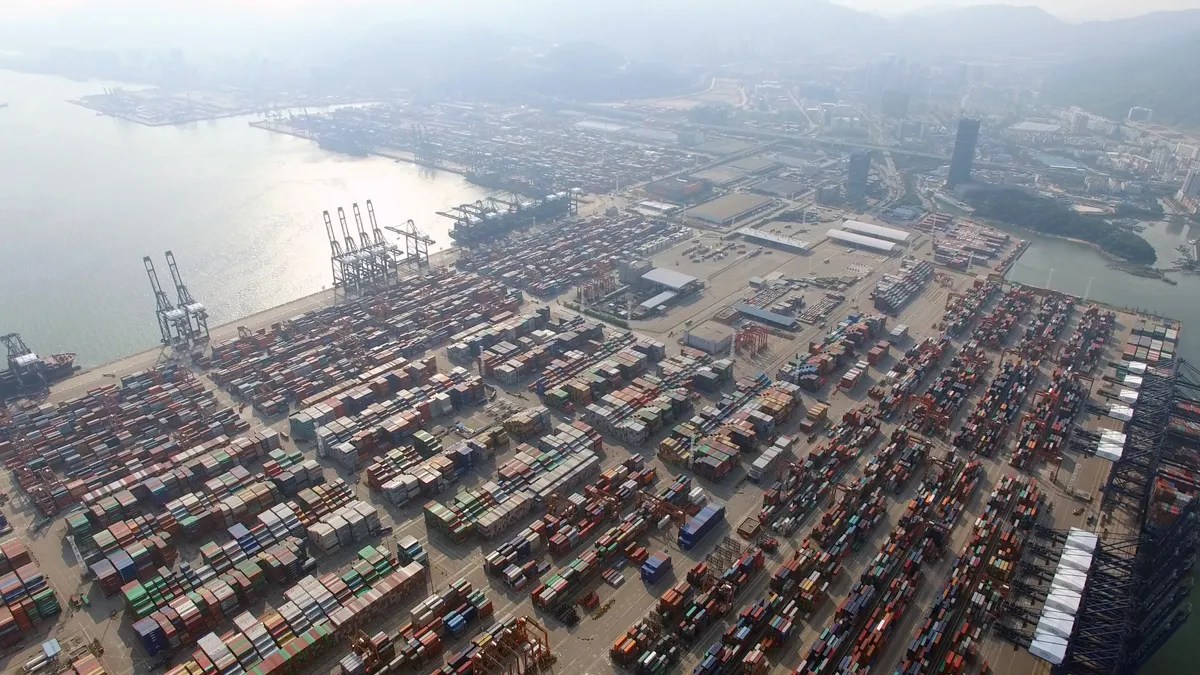
The “Made in China” label is ubiquitous in the United States, stamped on everything from industrial machinery to a pair of flip flops. But risks — from rising costs, to a trade war, to a pandemic — have prompted companies to rethink their relationships with suppliers and China.

“We’ve realized that we put too much power in a single country,” said Dawn Tiura, CEO of Sourcing Industry Group.

The change in tone from U.S. based supply chains is not a mass exodus from China. Instead, it’s an approach that embraces diversification.

The risks of single sourcing from China had been brewing for years, but they bubbled up even more during the COVID-19 pandemic. In early 2020, manufacturing and supplier operations in many parts of China ground to a halt. The effects rippled across the Transpacific to U.S. importers unable to procure goods.

Camille Batiste, senior vice president of global supply chain and procurement at Archer Daniels Midland, saw the disruption first hand. The company had multiple primary suppliers of a key ingredient for its energy drink customers, but they were located in China.

When the pandemic disrupted China production and exports, Batiste and her team had to “scrounge around and try to find other suppliers.”

Continue reading on Supply Chain Dive.

Mars Gears Up for a New CEO and Its Next Chapter

By Shefali Kapadia

From the outside, it appears an ordinary day at Mars’ headquarters, just across the border from
Washington, D.C., in Virginia. But inside the corporation, change is afoot. The CPG is gearing up for one of its biggest shifts since 2014, as a new CEO prepares to take the helm.

Inevitably, some degree of change is bound to happen under a new head honcho.

“Any new leader will also see new opportunities,” Andy Pharoah, VP of corporate affairs and sustainability at Mars and a member of the Mars Executive Board, told CPG Specialist

Frito-Lay bucks the trend of supply chain simplification

By Shefali Kapadia

When pandemic-driven lockdowns sent consumers home, Frito-Lay adjusted its inventory to meet increasing demand for its products.

The snack brand temporarily culled about 21% of its SKU portfolio to keep its supply chain as efficient as possible and deliver its most in-demand products, said Laura Maxwell, senior vice president of supply chain for PepsiCo Foods North America. By last summer, SKU counts had returned close to pre-pandemic levels.

“I’ll be the first to admit, last year, when we simplified the portfolio, from a supply chain perspective, we love that,” Maxwell said in an interview. “That gave us a lot of efficiency and velocity throughout the supply chain”

Read on Supply Chain Dive.

Transport execs confront high-stakes decision: remote, office or hybrid work?

By Shefali Kapadia

USA Truck, like many businesses, went fully remote for office operations last spring when the pandemic prompted large-scale shutdowns. The decision was straightforward for most companies, as they put staff safety above all else.

“When the pandemic hit … you have that ‘fight or flight’ button in your brain and say, ‘OK, what do we have to do to get through this?’” Nick Wakefield, vice president of human resources, driver recruiting and retention at USA Truck, said in an interview.

But the decision to bring staff back to the office is less black and white. Hybrid setups are a popular option, in which employees work some days from home and others days in the office.

Executives face myriad considerations in making this type of configuration work, from culture to safety to productivity. And the return to work is a high-stakes decision. Managers face the risk of employees quitting if they don’t offer remote or hybrid options. If variants of the virus emerge, the safety of staff working in close quarters could be in danger. Culture and engagement could suffer in a remote setup, ultimately leading to turnover issues.

The decision is particularly difficult for the transport sector, in which several types of jobs cannot be performed remotely. Employers that opt for a remote or hybrid setup for office workers must also consider the impacts on staff that cannot work from home, such as truck drivers and technicians.

USA Truck is in the process of its return-to-work planning, and managers are figuring out hybrid schedules for their teams after they saw many benefits of remote operations during the pandemic, Wakefield said.

“We’re actually finding employees are happier,” Wakefield said. “They’re growing and thriving.”

Continue reading on Trucking Dive.

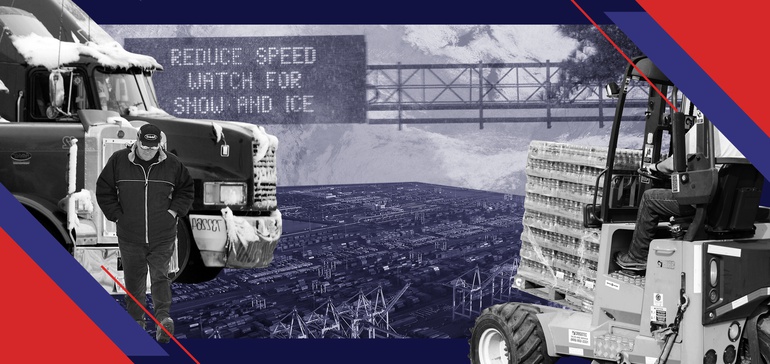
How supply chains contend with severe weather and climate disasters

In this seven-part series, Supply Chain Dive and sister publication Transport Dive explore the impacts of climate disasters and severe weather on logistics networks, and how supply chains respond to the current threat and fortify operations for the future.

As storms become more frequent and volatile, some ports plan for the risk — but most do not

By Matt Leonard. The interconnectedness of ports leave assets such as warehouses, trucking networks and railroads vulnerable to disruptions from climate change and rising sea levels. Read the full article ➔

Crumbling infrastructure, volatile weather a double whammy for logistics

By Jim Stinson. On streets and highways, transport leaders gird constantly for delays and rerouting.  Read the full article ➔

More frequent, severe wildfires threaten California’s growing logistics network

By Deborah Abrams Kaplan. Fires can clog and cut off freight arteries, creating choke points for inventory traveling via truck and rail. Read the full article ➔

Logistics firms can make a dent in climate change. I know from experience.

By Kathy Fulton. The last year has shown that supply chains are amazingly resilient, but even resilience has its limits, writes Kathy Fulton, executive director of the American Logistics Aid Network. Read the full article ➔

How trucking firms prepare drivers for severe weather

By Jim Stinson. Communication is crucial, as just one storm can cause nationwide havoc in freight movement. Read the full article ➔

Data vs. instinct: How autonomous trucks operate in stormy conditions

By Heather Larson. Radar, lidar and cameras substitute for — and even exceed — a human driver’s senses. Read the full article ➔

4 types of billion-dollar weather events tested supply chains in 2020

By Shefali Kapadia, S.L. Fuller. The combination of a record year for natural disasters and the pandemic magnified disruptions to shippers, carriers and everyone in-between. Read the full article ➔

9 charts show the highs and lows of supply chains in Q1

By Shefali Kapadia and Matt Leonard

The growth spurt in consumer spending that began last summer carried over into 2021, with knock-on effects to supply chains. Freight demand led to hikes in transportation prices and warehouse rents, alongside dips in capacity. 

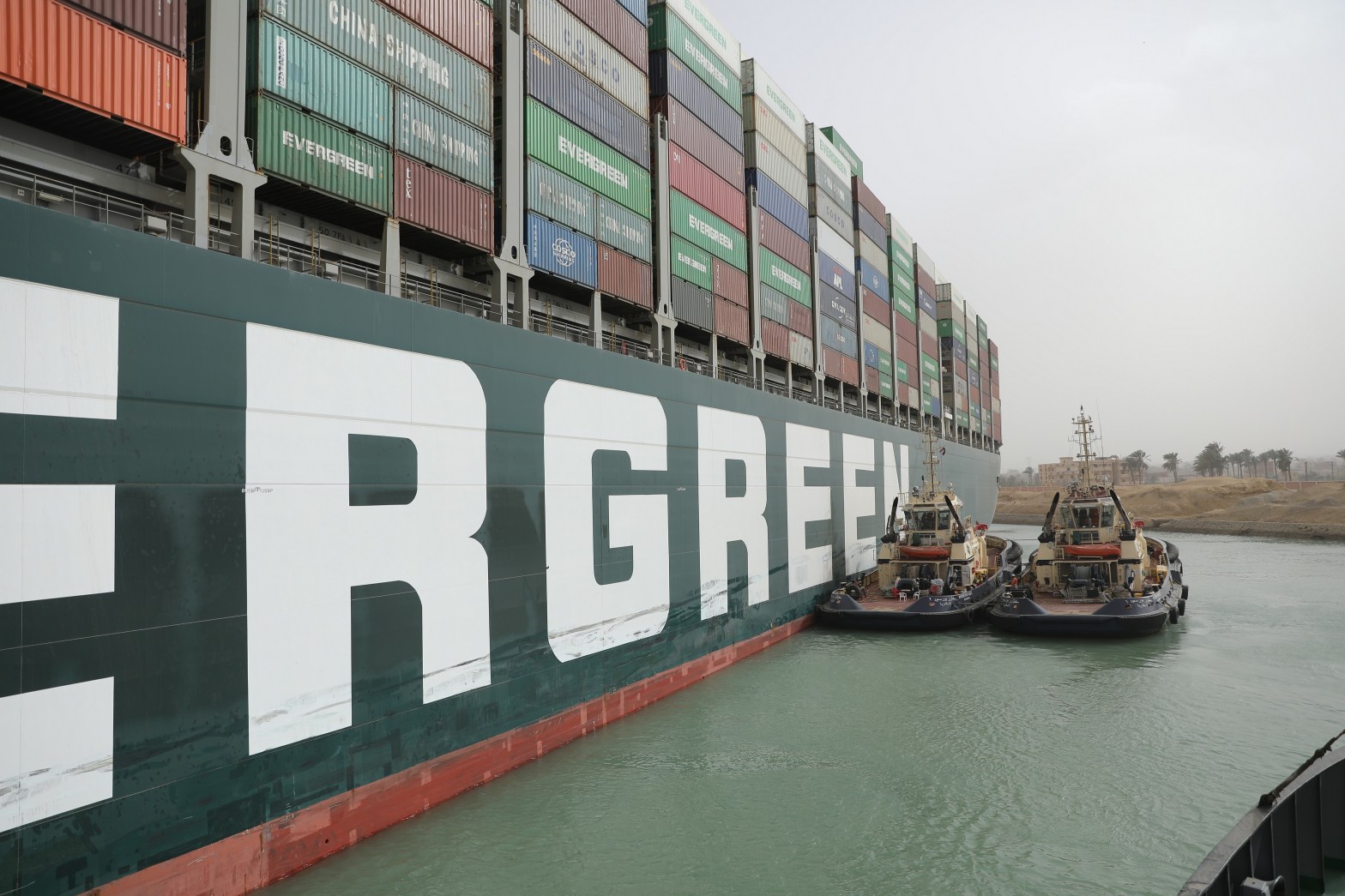
And near the end of the quarter, a global disruption occurred: The Ever Given became lodged in the Suez Canal. 

The charts below illustrate the story of supply chains in Q1 2021.

Read on Supply Chain Dive.

Timeline: How the Suez Canal blockage unfolded across supply chains

By Matt Leonard

When the Ever Given ran aground in the Suez Canal, it captured international attention as crews worked to dislodge the vessel and resume global trade flows.

Days after the vessel was freed, hundreds of container ships were still waiting to get through the canal as a result of the backlog created by the blockage. Here is what unfolded over the six days in which the container ship was stuck, and its lingering effects on the supply chain.

March 23

The ship is stuck

The Ever Given becomes stuck in the Suez Canal.

“The vessel grounded due to strong winds as the vessel, with two canal pilots onboard, was transiting northbound through the canal en route to Rotterdam, Netherlands,” BSM, the operator of the Ever Given, says in a statement the next day.

Read on Supply Chain Dive.

Congested West Coast ports bring the heat to TL spot rates

By Jim Stinson

Normality — at least what passes as normality in 2020 and 2021 — seemed to be slowly returning to trucking lanes out of the Los Angeles area after months of supply chain congestion. The number of ships offshore the ports of Los Angeles and Long Beach in California had dropped in late March, from its peak in February.

As drayage and dockworkers got the containers off ships and onto trucks or trains, headed toward warehouses, TL spot rates steadily declined, according to Dean Croke, DAT principal analyst. On average, TL spot rates out of Los Angeles or Ontario, California, dropped 7 cents for the week ended March 21, coming in at $2.84 per mile, Croke said.

“It looked like they had started to catch up,” said Croke.

But the latest numbers indicate imports show no sign of long-term decline, signaling elevated spot rates and tight capacity for the trucking market.

Read on Transport Dive.

The US has a new trade chief. What supply chains can expect on tariffs and China.

By Shefali Kapadia

Trade didn’t make it into the Biden administration’s seven immediate priorities. It’s not a subject where analysts and former trade representatives expect to see big moves or a flurry of activity.

But that hasn’t deterred newly-confirmed U.S. Trade Representative Katherine Tai.

“I don’t expect, if confirmed, to be put on the back burner at all,” Tai said at her confirmation hearing Feb. 25.

The Senate confirmed Tai to the cabinet position Wednesday on a vote of 98-0, after the Senate Finance Committee backed her unanimously.

Addressing China — from unfair trade practices to human rights abuses against Uyghurs — is a priority for the Biden administration, according to the president’s 2021 trade agenda. Tai is well-suited to lead that strategy, given her experience in the Office of the U.S. Trade Representative as Chief Counsel for China Trade Enforcement and litigating disputes on China export controls. Plus, she speaks fluent Mandarin.

“She’d be in a very good position to set priorities on what should be the changes to seek with China,” said Peter Allgeier, former deputy U.S. Trade Representative, prior to Tai’s confirmation.

Read on Supply Chain Dive.

Dole, Amazon settle in as logistics infrastructure in Wilmington, Delaware, builds up and out

By Shefali Kapadia

Interstate 495 is in clear view from the berths at the Port of Wilmington, Delaware. One traffic light and one turn is all it takes for trucks departing the port to reach the highway and haul their containers to dense population centers along the East Coast.

And running parallel to the interstate, railroad tracks host CSX and Norfolk Southern, providing direct freight rail connections to Chicago and other points east of the Mississippi River.

This central location is one of the prime reasons Amazon and Dole have long-standing histories in the Small Wonder’s largest city. When Amazon began building its fulfillment network in 1997, two locations made the list: Seattle and Wilmington. And the Port of Wilmington has been the mid-Atlantic hub for Dole and Chiquita since the 1980s.

The location offers close access to customers and labor but lower taxes and land prices than many of the surrounding markets, according to real estate experts.

Dole and Amazon are expanding their footprints in the first state. New infrastructure is going up at the Port of Wilmington. And Amazon is gearing up to move into a five-story fulfillment center currently under construction.

These moves are poised to boost the entire mid-Atlantic region with businesses seeking capacity and services to support their supply chains.

Continue reading on Supply Chain Dive.

Design a site like this with WordPress.com
Get started